在SpringMVC中主要是围绕着DispatcherServlet来设计,可以把它当做指挥中心。这里先说明一下SpringMVC文档给出的执行流程,然后是我们稍微具体的执行流程,最后是流程大致的源码跟踪。关于很很很详细的源码解析,这里暂先不做。
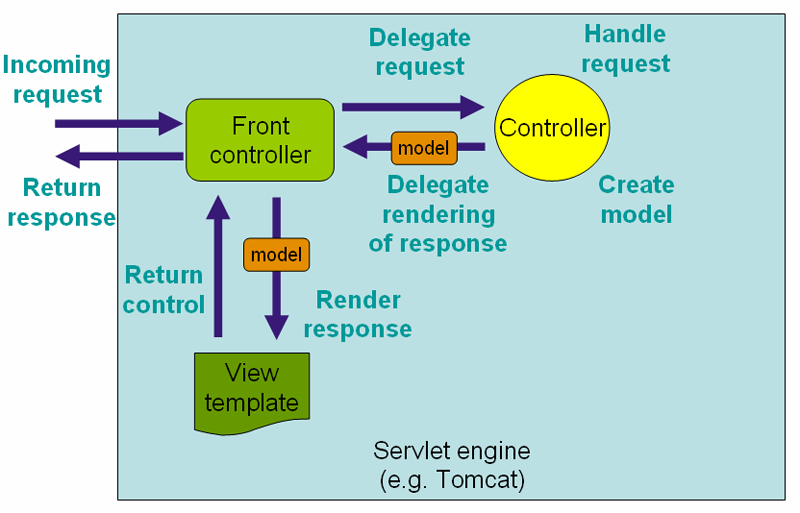
官方文档中的流程 首先看下SpringMVC文档上给的流程图:
用户请求首先发送到前端控制器DispatcherServlet,DispatcherServlet根据请求的信息来决定使用哪个页面控制器Controller(也就是我们通常编写的Controller)来处理该请求。找到控制器之后,DispatcherServlet将请求委托给控制器去处理。
接下来页面控制器开始处理用户请求,页面控制器会根据请求信息进行处理,调用业务层等等,处理完成之后,会把结果封装成一个ModelAndView返回给DispatcherServlet。
前端控制器DispatcherServlet接到页面控制器的返回结果后,根据返回的视图名选择相应的试图模板,并根据返回的数据进行渲染。
最后前端控制器DispatcherServlet将结果返回给用户。
更具体的流程 上面只是总体流程,接下来我们稍微深入一点,看下更具体的流程,这里没有图,只有步骤解析:
用户请求发送到前端控制器DispatcherServlet。
前端控制器DispatcherServlet接收到请求后,DispatcherServlet会使用HandlerMapping来处理,HandlerMapping会查找到具体进行处理请求的Handler对象。
HandlerMapping找到对应的Handler之后,并不是返回一个Handler原始对象,而是一个Handler执行链,在这个执行链中包括了拦截器和处理请求的Handler。HandlerMapping返回一个执行链给DispatcherServlet。
DispatcherServlet接收到执行链之后,会调用Handler适配器去执行Handler。
Handler适配器执行完成Handler(也就是我们写的Controller)之后会得到一个ModelAndView,并返回给DispatcherServlet。
DispatcherServlet接收到Handler适配器返回的ModelAndView之后,会根据其中的视图名调用视图解析器。
视图解析器根据逻辑视图名解析成一个真正的View视图,并返回给DispatcherServlet。
DispatcherServlet接收到视图之后,会根据上面的ModelAndView中的model来进行视图中数据的填充,也就是所谓的视图渲染。
渲染完成之后,DispatcherServlet就可以将结果返回给用户了。
源码 DispatcherServlet是一个Servlet,我们知道在Servlet在处理一个请求的时候会交给service方法进行处理,这里也不例外,DispatcherServlet继承了FrameworkServlet,首先进入FrameworkServlet的service方法:
1
2
3
4
5
6
7
8
9
10
11
12
protected void service (HttpServletRequest request, HttpServletResponse response) throws ServletException, IOException { String method = request.getMethod(); if (method.equalsIgnoreCase(RequestMethod.PATCH.name())) { processRequest(request, response); } else { super .service(request, response); } }
HttpServlet中会根据请求类型的不同分别调用doGet或者doPost等方法,FrameworkServlet中已经重写了这些方法,在这些方法中会调用processRequest进行处理,在processRequest中会调用doService方法,这个doService方法就是在DispatcherServlet中实现的。下面就看下DispatcherServlet中的doService方法的实现。
请求到达DispatcherServlet doService方法:
1
2
3
4
5
6
7
8
9
10
11
12
13
14
15
16
17
18
19
20
21
22
23
24
25
26
27
28
29
30
31
32
33
34
35
36
37
38
39
40
41
42
43
44
45
protected void doService (HttpServletRequest request, HttpServletResponse response) throws Exception Map<String, Object> attributesSnapshot = null ; if (WebUtils.isIncludeRequest(request)) { logger.debug("Taking snapshot of request attributes before include" ); attributesSnapshot = new HashMap<String, Object>(); Enumeration<?> attrNames = request.getAttributeNames(); while (attrNames.hasMoreElements()) { String attrName = (String) attrNames.nextElement(); if (this .cleanupAfterInclude || attrName.startsWith("org.springframework.web.servlet" )) { attributesSnapshot.put(attrName, request.getAttribute(attrName)); } } } request.setAttribute(WEB_APPLICATION_CONTEXT_ATTRIBUTE, getWebApplicationContext()); request.setAttribute(LOCALE_RESOLVER_ATTRIBUTE, this .localeResolver); request.setAttribute(THEME_RESOLVER_ATTRIBUTE, this .themeResolver); request.setAttribute(THEME_SOURCE_ATTRIBUTE, getThemeSource()); FlashMap inputFlashMap = this .flashMapManager.retrieveAndUpdate(request, response); if (inputFlashMap != null ) { request.setAttribute(INPUT_FLASH_MAP_ATTRIBUTE, Collections.unmodifiableMap(inputFlashMap)); } request.setAttribute(OUTPUT_FLASH_MAP_ATTRIBUTE, new FlashMap()); request.setAttribute(FLASH_MAP_MANAGER_ATTRIBUTE, this .flashMapManager); try { doDispatch(request, response); } finally { if (WebAsyncUtils.getAsyncManager(request).isConcurrentHandlingStarted()) { return ; } if (attributesSnapshot != null ) { restoreAttributesAfterInclude(request, attributesSnapshot); } } }
DispatcherServlet开始真正的处理,doDispatch方法:
1
2
3
4
5
6
7
8
9
10
11
12
13
14
15
16
17
18
19
20
21
22
23
24
25
26
27
28
29
30
31
32
33
34
35
36
37
38
39
40
41
42
43
44
45
46
47
48
49
50
51
52
53
54
55
56
57
58
59
60
61
62
63
64
65
66
67
68
69
70
71
72
73
74
75
76
77
78
79
protected void doDispatch (HttpServletRequest request, HttpServletResponse response) throws Exception HttpServletRequest processedRequest = request; HandlerExecutionChain mappedHandler = null ; boolean multipartRequestParsed = false ; WebAsyncManager asyncManager = WebAsyncUtils.getAsyncManager(request); try { ModelAndView mv = null ; Exception dispatchException = null ; try { processedRequest = checkMultipart(request); multipartRequestParsed = processedRequest != request; mappedHandler = getHandler(processedRequest, false ); if (mappedHandler == null || mappedHandler.getHandler() == null ) { noHandlerFound(processedRequest, response); return ; } HandlerAdapter ha = getHandlerAdapter(mappedHandler.getHandler()); String method = request.getMethod(); boolean isGet = "GET" .equals(method); if (isGet || "HEAD" .equals(method)) { long lastModified = ha.getLastModified(request, mappedHandler.getHandler()); if (new ServletWebRequest(request, response).checkNotModified(lastModified) && isGet) { return ; } } if (!mappedHandler.applyPreHandle(processedRequest, response)) { return ; } try { mv = ha.handle(processedRequest, response, mappedHandler.getHandler()); } finally { if (asyncManager.isConcurrentHandlingStarted()) { return ; } } applyDefaultViewName(request, mv); mappedHandler.applyPostHandle(processedRequest, response, mv); } catch (Exception ex) { dispatchException = ex; } processDispatchResult(processedRequest, response, mappedHandler, mv, dispatchException); } catch (Exception ex) { triggerAfterCompletion(processedRequest, response, mappedHandler, ex); } catch (Error err) { triggerAfterCompletionWithError(processedRequest, response, mappedHandler, err); } finally { if (asyncManager.isConcurrentHandlingStarted()) { mappedHandler.applyAfterConcurrentHandlingStarted(processedRequest, response); return ; } if (multipartRequestParsed) { cleanupMultipart(processedRequest); } } }
可以看到大概的步骤还是按照我们上面分析的走的。
查找请求对应的Handler对象 对应着这句代码 mappedHandler = getHandler(processedRequest, false);,看下具体的getHandler方法:
1
2
3
protected HandlerExecutionChain getHandler (HttpServletRequest request, boolean cache) throws Exception return getHandler(request); }
继续往下看getHandler:
1
2
3
4
5
6
7
8
9
10
11
protected HandlerExecutionChain getHandler (HttpServletRequest request) throws Exception for (HandlerMapping hm : this .handlerMappings) { HandlerExecutionChain handler = hm.getHandler(request); if (handler != null ) { return handler; } } return null ; }
继续往下看getHandler,在AbstractHandlerMapping类中:
1
2
3
4
5
6
7
8
9
10
11
12
13
14
15
16
17
18
19
public final HandlerExecutionChain getHandler (HttpServletRequest request) throws Exception Object handler = getHandlerInternal(request); if (handler == null ) { handler = getDefaultHandler(); } if (handler == null ) { return null ; } if (handler instanceof String) { String handlerName = (String) handler; handler = getApplicationContext().getBean(handlerName); } return getHandlerExecutionChain(handler, request); }
根据requrst获取handler 首先看下根据requrst获取handler步骤getHandlerInternal方法,在AbstractHandlerMethodMapping中:
1
2
3
4
5
6
7
8
protected HandlerMethod getHandlerInternal (HttpServletRequest request) throws Exception String lookupPath = getUrlPathHelper().getLookupPathForRequest(request); HandlerMethod handlerMethod = lookupHandlerMethod(lookupPath, request); return (handlerMethod != null ) ? handlerMethod.createWithResolvedBean() : null ; }
看下根据路径寻找handler的方法lookupHandlerMethod:
1
2
3
4
5
6
7
8
9
10
11
12
13
14
15
16
17
18
19
20
21
22
23
24
25
26
27
28
29
30
31
32
33
34
35
36
37
38
39
protected HandlerMethod lookupHandlerMethod (String lookupPath, HttpServletRequest request) throws Exception List<Match> matches = new ArrayList<Match>(); List<T> directPathMatches = this .urlMap.get(lookupPath); if (directPathMatches != null ) { addMatchingMappings(directPathMatches, matches, request); } if (matches.isEmpty()) { addMatchingMappings(this .handlerMethods.keySet(), matches, request); } if (!matches.isEmpty()) { Comparator<Match> comparator = new MatchComparator(getMappingComparator(request)); Collections.sort(matches, comparator); Match bestMatch = matches.get(0 ); if (matches.size() > 1 ) { Match secondBestMatch = matches.get(1 ); if (comparator.compare(bestMatch, secondBestMatch) == 0 ) { Method m1 = bestMatch.handlerMethod.getMethod(); Method m2 = secondBestMatch.handlerMethod.getMethod(); throw new IllegalStateException( "Ambiguous handler methods mapped for HTTP path '" + request.getRequestURL() + "': {" + m1 + ", " + m2 + "}" ); } } handleMatch(bestMatch.mapping, lookupPath, request); return bestMatch.handlerMethod; } else { return handleNoMatch(handlerMethods.keySet(), lookupPath, request); } }
获取默认Handler 如果上面没有获取到Handler,就会获取默认的Handler。如果还获取不到就返回null。
处理String类型的Handler 如果上面处理完的Handler是String类型的,就会根据这个handlerName获取bean。
封装Handler执行链 上面获取完Handler,就开始封装执行链了,就是将我们配置的拦截器加入到执行链中去,getHandlerExecutionChain:
1
2
3
4
5
6
7
8
9
10
11
12
13
14
15
16
17
18
protected HandlerExecutionChain getHandlerExecutionChain (Object handler, HttpServletRequest request) HandlerExecutionChain chain = (handler instanceof HandlerExecutionChain) ? (HandlerExecutionChain) handler : new HandlerExecutionChain(handler); chain.addInterceptors(getAdaptedInterceptors()); String lookupPath = urlPathHelper.getLookupPathForRequest(request); for (MappedInterceptor mappedInterceptor : mappedInterceptors) { if (mappedInterceptor.matches(lookupPath, pathMatcher)) { chain.addInterceptor(mappedInterceptor.getInterceptor()); } } return chain; }
获取对应请求的Handler适配器 getHandlerAdapter:
1
2
3
4
5
6
7
8
9
protected HandlerAdapter getHandlerAdapter (Object handler) throws ServletException for (HandlerAdapter ha : this .handlerAdapters) { if (ha.supports(handler)) { return ha; } } }
缓存的处理 也就是对last-modified的处理
执行拦截器的preHandle方法 就是遍历所有的我们定义的interceptor,执行preHandle方法
使用Handler适配器执行当前的Handler ha.handle执行当前Handler,我们这里使用的是RequestMappingHandlerAdapter,首先会进入AbstractHandlerMethodAdapter的handle方法:
1
2
3
4
public final ModelAndView handle (HttpServletRequest request, HttpServletResponse response, Object handler) throws Exception { return handleInternal(request, response, (HandlerMethod) handler); }
handleInternal方法,在RequestMappingHandlerAdapter中:
1
2
3
4
5
6
7
8
9
10
11
12
13
14
15
16
17
18
19
20
21
22
23
24
25
protected final ModelAndView handleInternal (HttpServletRequest request, HttpServletResponse response, HandlerMethod handlerMethod) throws Exception if (getSessionAttributesHandler(handlerMethod).hasSessionAttributes()) { checkAndPrepare(request, response, this .cacheSecondsForSessionAttributeHandlers, true ); } else { checkAndPrepare(request, response, true ); } if (this .synchronizeOnSession) { HttpSession session = request.getSession(false ); if (session != null ) { Object mutex = WebUtils.getSessionMutex(session); synchronized (mutex) { return invokeHandleMethod(request, response, handlerMethod); } } } return invokeHandleMethod(request, response, handlerMethod); }
组装默认视图名称 前缀和后缀名都加上
执行拦截器的postHandle方法 遍历intercepter的postHandle方法。
处理最后的结果,渲染之类的 processDispatchResult方法:
1
2
3
4
5
6
7
8
9
10
11
12
13
14
15
16
17
18
19
20
21
22
23
24
25
26
27
28
29
30
31
32
33
34
35
36
private void processDispatchResult (HttpServletRequest request, HttpServletResponse response, HandlerExecutionChain mappedHandler, ModelAndView mv, Exception exception) throws Exception boolean errorView = false ; if (exception != null ) { if (exception instanceof ModelAndViewDefiningException) { mv = ((ModelAndViewDefiningException) exception).getModelAndView(); } else { Object handler = (mappedHandler != null ? mappedHandler.getHandler() : null ); mv = processHandlerException(request, response, handler, exception); errorView = (mv != null ); } } if (mv != null && !mv.wasCleared()) { render(mv, request, response); if (errorView) { WebUtils.clearErrorRequestAttributes(request); } } else { } if (WebAsyncUtils.getAsyncManager(request).isConcurrentHandlingStarted()) { return ; } if (mappedHandler != null ) { mappedHandler.triggerAfterCompletion(request, response, null ); } }
重点看下render方法,进行渲染:
1
2
3
4
5
6
7
8
9
10
11
12
13
14
15
16
17
18
19
20
21
22
protected void render (ModelAndView mv, HttpServletRequest request, HttpServletResponse response) throws Exception Locale locale = this .localeResolver.resolveLocale(request); response.setLocale(locale); View view; if (mv.isReference()) { view = resolveViewName(mv.getViewName(), mv.getModelInternal(), locale, request); } else { view = mv.getView(); if (view == null ) { throw new ServletException("ModelAndView [" + mv + "] neither contains a view name nor a " + "View object in servlet with name '" + getServletName() + "'" ); } } view.render(mv.getModelInternal(), request, response); }
view.render就是进行视图的渲染,然后跳转页面等处理。
到这里大概的流程就走完了。其中涉及到的东西还有很多,暂先不做详细处理。
原文:SpringMVC执行流程及源码解析